The point-of-sale system began as a saloon owner’s defense against his own bartenders. Nearly 150 years later, it runs the entire pizzeria. Here is how it got from there to here, and why pizza kept pushing it forward.
The TL;DR
The first POS was a cash register patented in 1879 by James and John Ritty of Dayton, Ohio. Its only job was stopping employee theft.
Computerized POS arrived in 1973, the first restaurant-grade microprocessor system in 1974, and the first graphical touchscreen POS in 1986.
Pizza has driven POS forward at every turn, from complex order building to the first online food order in 1994.
A modern pizza POS runs ordering, kitchen routing, delivery, payments, labor, inventory, and marketing from one cloud-native platform.
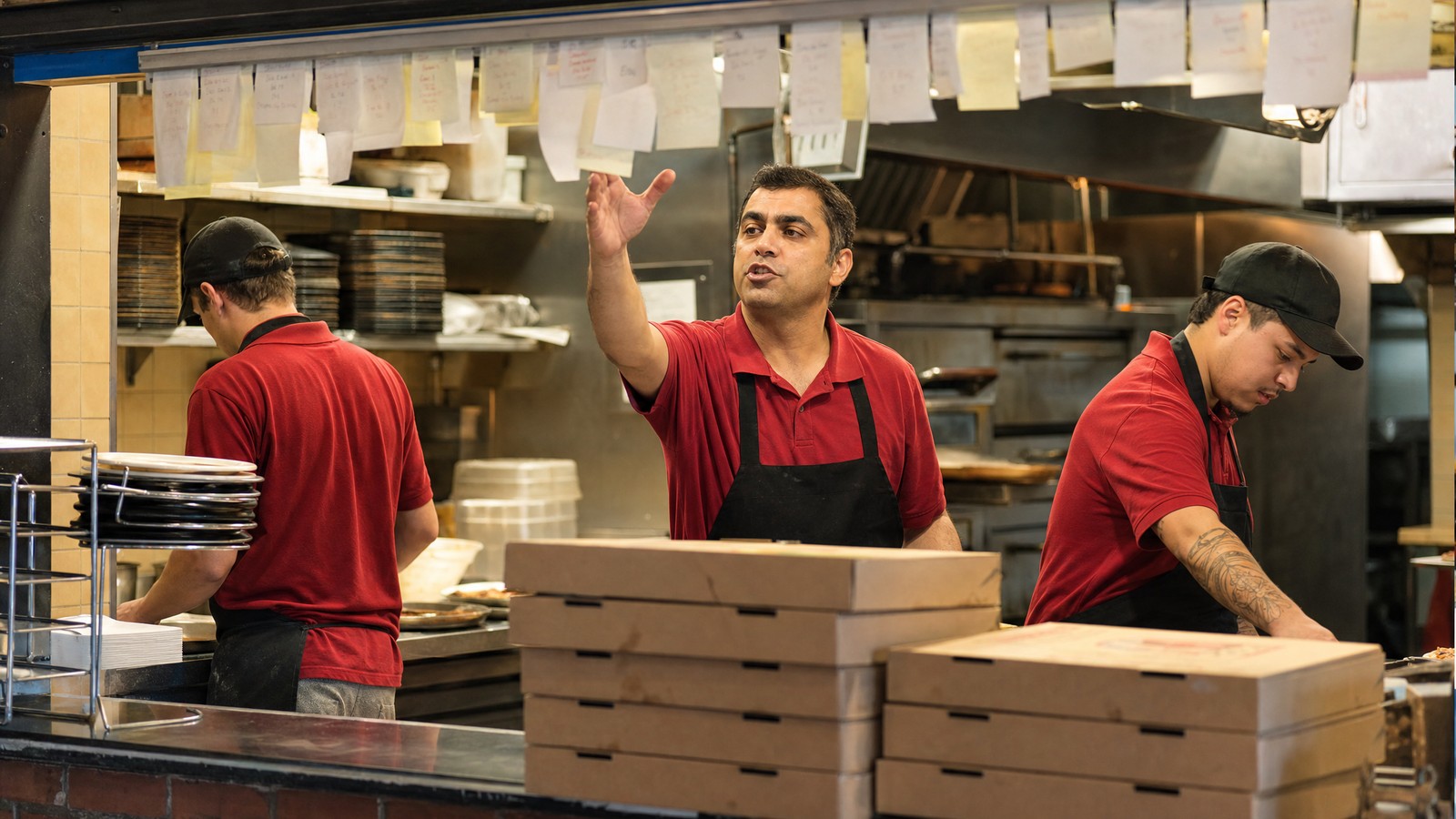
It’s 6:40 on a Friday. The phone has rung four times in two minutes, the make line is three tickets deep, and a caller wants a large half pepperoni, half mushroom with light sauce on the mushroom side only. A generation ago, that order lived on a carbon-copy ticket and in the memory of whoever picked up the phone. Today it prices itself, routes to the right station, and lands in a driver’s queue before the dough hits the oven.
The machine on the counter has come a long way. It started with a bar owner who couldn’t trust his staff.
What Was the First POS System?
The first commercially successful point-of-sale device was Ritty’s Incorruptible Cashier, patented by brothers James and John Ritty on November 4, 1879. James ran a saloon in Dayton, Ohio, and his bartenders were pocketing the take. On a steamship crossing to Europe, he watched a mechanism count the turns of the ship’s propeller and realized a machine could count sales the same way.
The device he and his brother built was crude by any modern standard. It tallied each sale and displayed the amount where the customer could see it, which turned every patron into an auditor. It did not track inventory, staffing, or customers. It answered one question for the owner: how much money came in while he wasn’t watching.
Running a saloon and a factory at the same time wore Ritty down. In 1881 he sold the business and the patent for a reported $1,000. The cash register went on to become a fixture of every counter in America, but the instinct behind it never changed. Owners want to know what happened when they weren’t standing there.
When Did POS Systems Become Computerized?
POS systems became computerized in 1973, when IBM released its 3650 and 3660 store systems. These were networked terminals tied to a central computer, and the first one went into a Dillard’s department store in Little Rock, Arkansas. For the first time, a manager could watch sales flow in close to real time and make restocking decisions from data instead of a walk through the stockroom.
Restaurants entered the story a year later. In 1974, William Brobeck and Associates built one of the first microprocessor-controlled register systems for McDonald’s, running on an early Intel chip. Each station showed the full order as it was built, item by item, and gave the owner a check on what should be sitting in the cash drawer.
That detail matters. Retail sells finished goods off a shelf. Food service sells orders that get built, modified, and sent to a kitchen. From the moment POS crossed into restaurants, it had to manage a process, not just record a payment.
When Did Touchscreen POS Systems Appear?
The first graphical touchscreen POS appeared in 1986, when restaurateur Gene Mosher demonstrated his software at the Comdex trade show in Las Vegas on an Atari 520ST. Instead of memorized key codes, staff tapped a button for each menu item. It is the basic interface nearly every restaurant POS still uses.
Through the late 1980s and 1990s, PC-based systems spread through the industry. They brought inventory counts, timeclocks, and sales reports onto the same machine that took the order. They also brought the server in the back office closet, the dial-up modem, and the technician who drove out when something broke. Every store’s data lived in that store. Seeing how five locations performed meant collecting five reports.
Why Pizza Has Always Pushed POS Forward
Pizza produces the hardest orders in food service. Sizes, crusts, and toppings multiply into thousands of combinations. Half-and-half pies need split pricing. Coupons stack. Delivery zones carry different fees. Phone volume spikes in waves that would break a system designed for one customer at a time.
Pizza also got to the internet first. In August 1994, Pizza Hut and the Santa Cruz Operation launched PizzaNet, a pilot that let customers in Santa Cruz, California, order delivery through a web browser. It is widely cited as the first online food order. The tech was primitive: orders were relayed to the store, staff called to confirm, and customers paid cash at the door. But the pattern was set. Pizza customers would order from wherever they were, and the POS would have to keep up.
Systems built for retail checkout or table service have always treated pizza as an edge case. That gap is the core of the pizza POS vs. generic restaurant POS debate, and it is why pizza operators tend to feel the limits of a system before anyone else does.
POS History at a Glance
| Year | Milestone | What It Changed |
|---|
| 1879 | Ritty’s Incorruptible Cashier patented | Every sale recorded and visible |
| 1973 | IBM 3650 and 3660 store systems | Networked, computerized POS |
| 1974 | Microprocessor register system for McDonald’s | POS built around order building |
| 1986 | First graphical touchscreen POS | Tap a button per menu item |
| 1994 | PizzaNet online ordering pilot | Orders start arriving from outside the store |
| 2015 | U.S. EMV liability shift | Swiping a chip card puts fraud liability on the merchant |
| 2010s | Cloud-native POS | No back-office server; live data from any location |
*Cloud-native POS emerged gradually over the decade rather than on a single launch date.
How Payments Reshaped the Counter
On October 1, 2015, the card networks shifted liability for counterfeit card fraud in the United States. A merchant who swiped a chip card on an old magnetic-stripe reader could now be stuck with the chargeback. Operators replaced terminals on short notice, and plenty of them found the new hardware only worked with one payment processor. That is how a security upgrade turned into years of hardware and payment lock-in for a lot of pizzerias.
Meanwhile, the way customers pay kept moving away from the drawer Ritty built.
14%
Cash’s share of U.S. consumer payments by number in 2024, per the Federal Reserve. Credit cards accounted for 35% and debit cards for 30%.
Tap to pay, phone wallets, and prepaid online orders are now routine. A POS that can’t accept them cleanly at the counter, at the door, and online isn’t a cash register anymore. It’s a bottleneck.
The first POS answered one question: what happened while the owner wasn’t looking? Every system since has been chasing a better answer.
What Does a Modern Pizza POS Actually Do?
A modern pizza POS is the operating system for the whole store. It still takes the payment, but that is now the smallest part of its job. The five core functions of a POS have expanded into a full operating layer:
- Order entry built for pizza. Half-and-half pricing, meal deals, and multi-location menus handled natively instead of through workarounds.
- Native online ordering. Web and branded app orders flow into the same system as counter and phone orders, with loyalty synced across every channel.
- Kitchen routing. A kitchen display system sends each item to the right station and prioritizes by order type, so the paper ticket rail disappears.
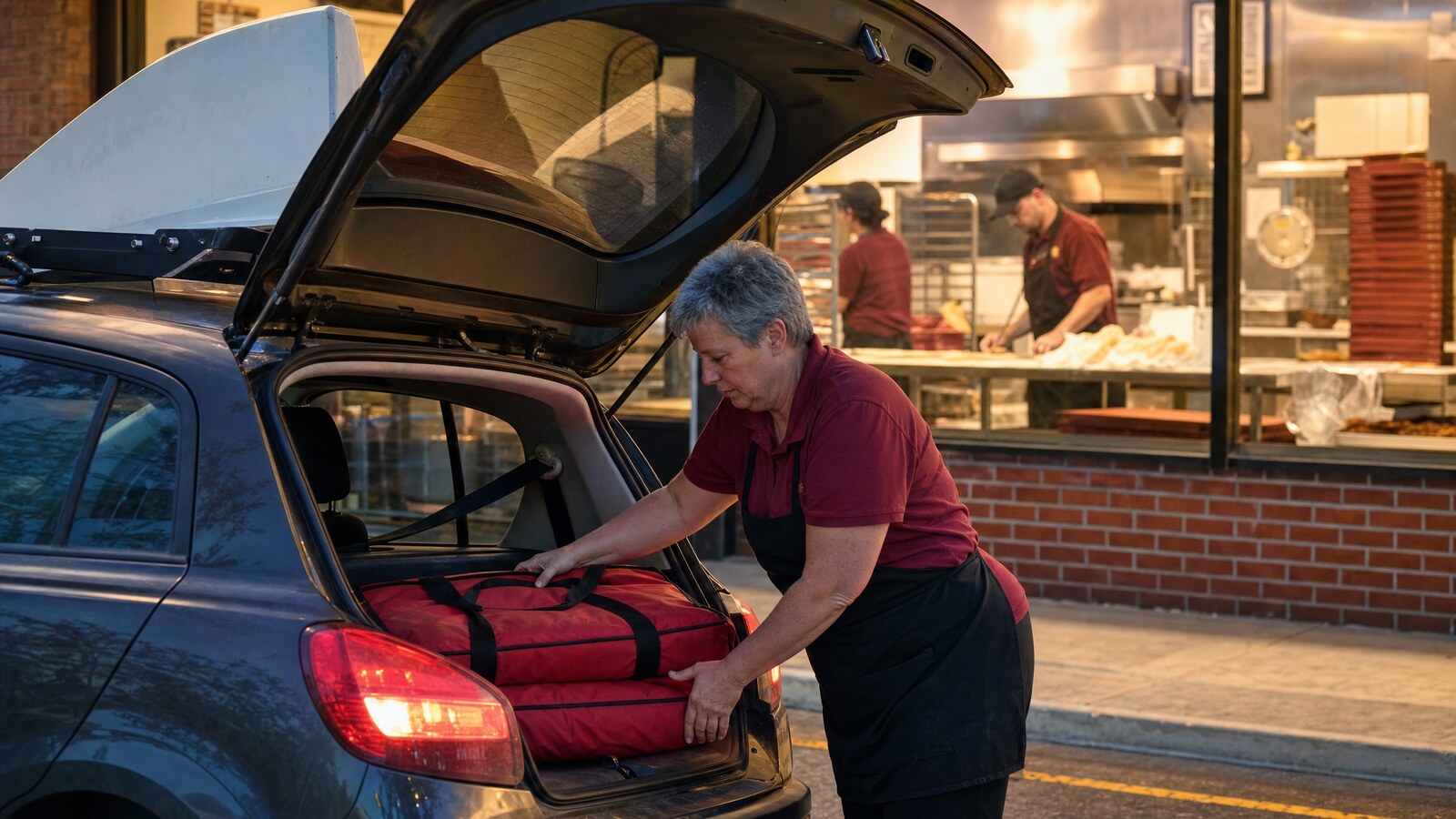
- Delivery management. In-house drivers and DoorDash, Uber Eats, and Grubhub orders managed from one screen, with multi-stop routing in the driver app.
- Labor and inventory. Predictive scheduling forecasts staffing from sales history, and inventory tools project dough needs before the morning prep starts.
- Marketing and guest data. Unified customer profiles drive segmented email and SMS campaigns, coupons, and post-order surveys.
Adora POS was built around that list from the start, as a pizza-first, cloud-native platform. Ritty’s machine recorded what already happened. A modern pizza POS helps the owner decide what happens next.
Run your pizzeria on a POS built for how pizza is ordered now.
Native online ordering, station-routed KDS, delivery management, predictive scheduling, and payment flexibility in one cloud-native platform.
Schedule a Demo →
One Friday Night, Three Eras
Picture the same Friday rush at a three-store pizza operation in three different decades. This is an illustrative composite, not a single customer story.
1985. Orders go on paper tickets. The register totals each sale and nothing else. The owner counts drawers after close and learns how Friday went on Saturday morning, one store at a time.
2005. A PC-based system sits in each back office. Phone orders get keyed in by hand, and an online order prints on a separate machine and gets re-entered. Reports exist, but each store’s numbers live on its own server.
Today. Online, phone, and counter orders hit the same queue and route to the kitchen display by station. Drivers get multi-stop routes on their phones. If labor drifts above target or ticket times climb at one location, the owner gets a text alert while there is still time to fix it.
The biggest change across 150 years is timing. Owners used to find out after the night was over. Now they can act during it.
From One Store to Many
The server-in-the-closet model breaks the moment a brand grows. Every menu change has to be made store by store. Every report has to be stitched together. An employee who covers shifts at two locations exists twice in two systems.
A truly cloud-native POS removes that friction. One menu or price change pushes to every location. Employees are shared across stores. Inventory can transfer between units, and enterprise dashboards show the whole operation in one view. The details of what cloud-based POS really means for pizza chains matter here, because some systems marketed as cloud still depend on hardware in every store.
Where Is POS Technology Heading Next?
The next stage of POS is forecasting. The data now exists to plan a shift before it happens rather than review it afterward. Predictive scheduling already builds labor plans from prior weeks, the same week in previous years, order mix, and delivery volume. Dough projections do the same for prep.
The second shift is openness. Big-box POS companies built walled gardens. Operators now expect open APIs that connect the POS to accounting, payroll, business intelligence, and voice ordering partners without a custom project for each one.
The third is a tighter loop with guests. A post-order survey, a segmented text campaign, and a loyalty reward all draw on the same customer profile. Feedback that once arrived as a complaint at the counter now shows up in the data while there is still time to respond.
James Ritty wanted to know what was happening behind his bar. Pizza operators want the same thing across one store or a hundred, in real time, before the rush instead of after it. If you want to see what that looks like on a Friday night, book a walkthrough with the Adora team.
Sources & Data
Ritty patent date, saloon background, and propeller-counter origin: Wikipedia, James Ritty. Sale of the business and patent for a reported $1,000: Retail Brew. IBM 3650 and 3660 introduction and first installation at Dillard’s: IBM History. 1974 microprocessor system for McDonald’s and the 1986 touchscreen POS demonstration at Comdex: Wikipedia, Point of Sale. PizzaNet launch in Santa Cruz in August 1994: QSR Magazine and Santa Cruz Tech Beat. October 1, 2015 EMV liability shift: Dykema Gossett via Mondaq. Payment shares for 2024 (cash 14%, credit 35%, debit 30% of payments by number): Federal Reserve Financial Services, 2025 Diary of Consumer Payment Choice. The “One Friday Night, Three Eras” section is an illustrative composite, not a documented customer case.