
What to Look for in a POS Built for Pizza Chains
RESTAURANT TECHNOLOGY
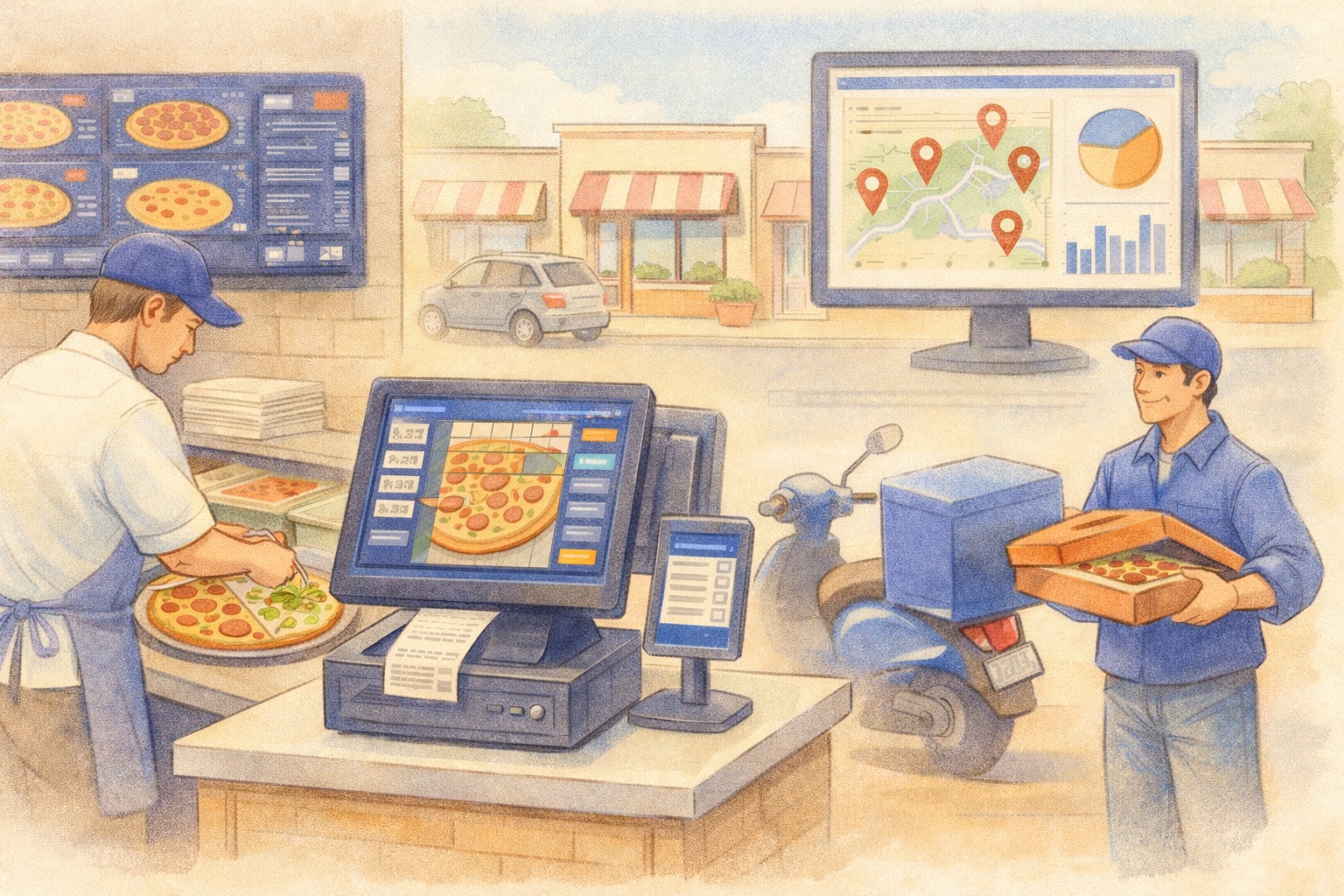
Choosing the right POS for pizza chains is one of the most important technology decisions a growing pizzeria can make. A pizza chain operates differently from a single-location restaurant, and a generic restaurant POS often can’t keep up with the speed, complexity, and scale required.
A true pizza POS system should be designed specifically for pizza operations, multi-unit management, delivery-heavy workflows, and high-volume rushes. If you’re evaluating a pizzeria POS or considering switching systems, here’s what to look for in a POS built for pizza chains.
1. Pizza-First Menu Management
Pizza chains need a pizza POS that understands pizza at a foundational level. Sizes, crusts, half-and-half toppings, specialty builds, and modifiers should be native features, not workarounds.
A strong POS for pizza chains should support:
- Half-and-half and custom pizza builds without slowing order entry
- Complex modifiers that stay readable on tickets and KDS
- Centralized menu control across all locations
When a pizzeria POS system isn’t built for pizza menus, order entry slows down, mistakes increase, and training becomes harder across multiple stores.
2. Speed That Holds Up During Rush
Pizza chains rely on speed. Lunch rush, dinner rush, late-night rush, and your pizza POS system must perform consistently when order volume spikes.
Look for a pizza chain POS that delivers:
- Fast order entry with minimal taps
- Stable performance under high volume
- No lag across multiple terminals and locations
A multi-unit pizza POS should feel just as fast at 20 locations as it does at two. If speed degrades as you grow, the POS becomes a bottleneck.
3. Built-In Multi-Unit Pizza Management
A POS for pizza chains should be built with multi-unit operations in mind from day one. Managing multiple locations should be centralized, not fragmented.
Key features of a true multi-unit pizza POS include:
- Chain-wide menu and pricing control
- Location-level flexibility without breaking brand standards
- Unified reporting across all pizzerias
Pizza chains outgrow systems quickly when multi-unit support is treated as an add-on instead of a core function.
4. Integrated Online Ordering and Delivery
Delivery and online ordering are core revenue drivers for pizza chains. A modern pizza POS must treat them as first-class features, not separate systems.
A well-designed POS for pizza chains should:
- Feed online orders directly into the POS workflow
- Support first-party delivery operations
- Integrate cleanly with third-party delivery services
Disconnected systems create chaos. An integrated pizzeria POS keeps orders flowing smoothly from customer to kitchen to driver.
5. Kitchen Display Systems Built for Pizza
A pizza kitchen has a unique flow. A pizza POS system should support kitchen display systems that reflect how pizzas are actually made and staged.
Look for a pizza chain POS that offers:
- Pizza-optimized KDS layouts
- Clear visibility for modifiers and custom builds
- Logical order grouping and timing
When the pizzeria POS matches kitchen reality, accuracy improves and ticket times drop.
6. Reporting Designed for Pizza Chains
Generic reports don’t cut it for pizza operators. A POS built for pizza chains should deliver reporting that answers operational questions quickly.
Effective pizza POS reporting helps operators understand:
- Performance by location and daypart
- Delivery vs. carryout trends
- Bottlenecks during peak hours
A strong multi-unit pizza POS turns data into decisions, not spreadsheets.
7. Scalability for Growing Pizza Brands
Pizza chains grow fast. Your pizza POS system should scale without forcing you to rebuild your entire tech stack.
A scalable POS for pizza chains allows you to:
- Add locations without redoing menus
- Train staff quickly across stores
- Maintain consistency as the brand grows
If your POS can’t grow with your pizza chain, it will eventually hold it back.
8. Support That Understands Pizza Operations
When issues arise, pizza chains need support teams that understand pizza rushes, delivery pressure, and real-world operations.
A pizza-focused POS provider knows that downtime on a Friday night isn’t just an inconvenience; it’s lost revenue and frustrated customers.
Why Pizza Chains Are Choosing Pizza-Specific POS Systems
Many pizza chains start on general restaurant POS platforms and later realize those systems weren’t designed for pizza complexity or multi-unit growth.
A pizza-specific POS eliminates:
- Manual workarounds
- Slower order entry
- Fragmented multi-location management
That’s why growing brands are moving to POS systems built for pizza chains, not systems adapted after the fact.
Choosing the Right POS for Your Pizza Chain
The best pizza POS supports speed, consistency, delivery, and scale across every location. It simplifies operations today and supports growth tomorrow.
When evaluating a POS for pizza chains, ask one question:
Was this system built specifically for pizza, or adapted later?
That distinction matters.
Read more
See all articles
How to Open a Second Pizzeria Location: A Step-by-Step Checklist
RESTAURANT TIPS
Advice by the Slice: Detroit Style Pizza Is Having Its Moment
RESTAURANT TIPS

Staggered POS Contracts: How They Lock You In and How to Get Out
RESTAURANT TIPS