Why "Free" POS Hardware Might Be the Most Expensive Decision You Make
RESTAURANT TECHNOLOGY
Free terminals, half-off hardware, no-cost POS deals. Here's what those promotions actually cost you over the life of the contract.
The TL;DR
- “Free” POS hardware comes attached to multi-year contracts with steep early termination fees.
- Bundled payment processing lets POS companies mark up every transaction you run.
- Hardware lock-in limits your integrations, your flexibility, and your leverage.
- Adora POS is hardware-agnostic, payment-agnostic, and built specifically for pizza operations.
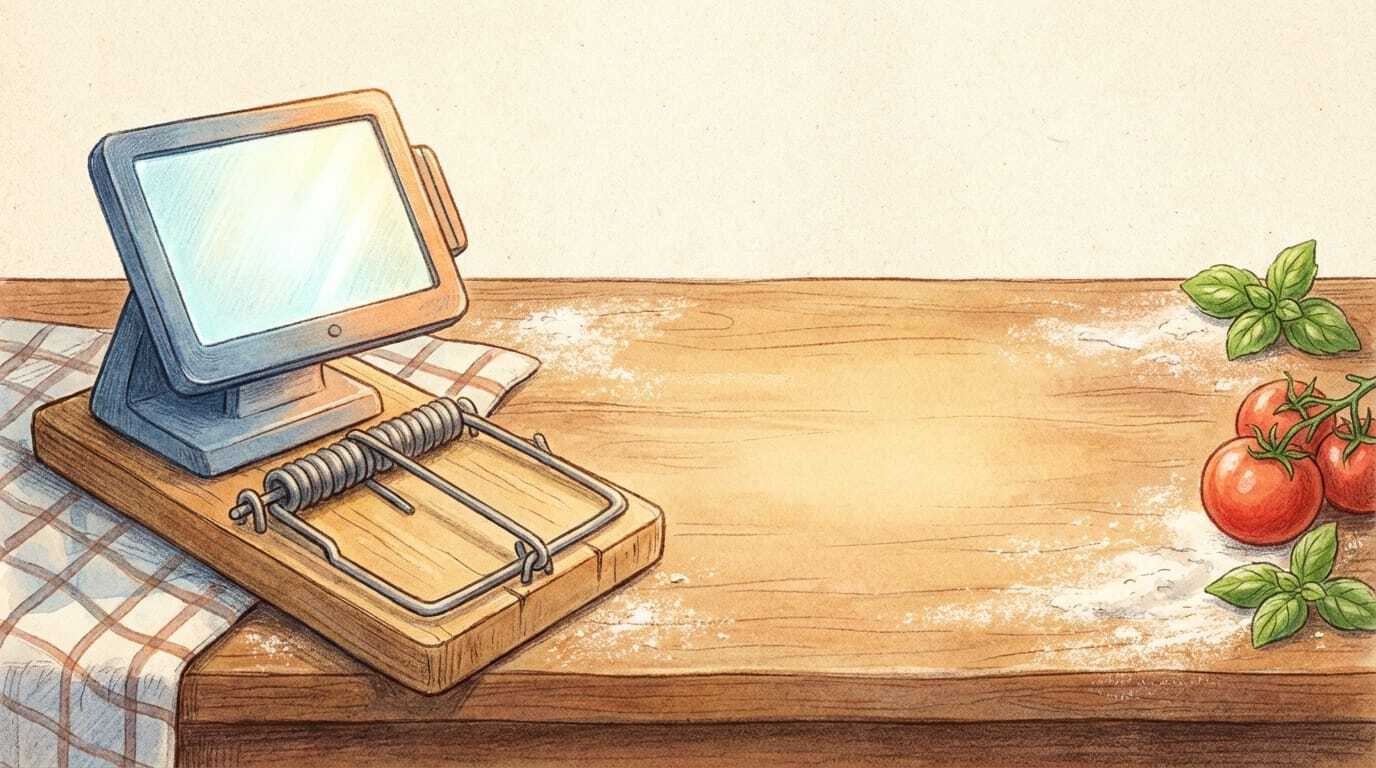
The Hardware Is Free. The Contract Is Not.
You’ve probably seen the ads. Free terminals. Half-off hardware. Sign up now and get your POS system at “no cost.” It sounds like a smart move, especially when you’re already managing food costs, labor, delivery logistics, and a hundred other things competing for your attention and your budget. Who wouldn’t want to cross “POS hardware” off the expense list?
But here’s what those ads from other POS providers don’t put in the headline.
That equipment comes attached to a service agreement, often three to five years, with terms that are easy to miss and expensive to break. Early termination fees run into the tens of thousands. Miss the cancellation window by a few days, and you’re automatically rolled into another term. Once you’re in, you’re on their timeline, their pricing, and their rules.
The hardware was never really free. You’re just paying for it in ways that don’t show up on the initial quote.
Processing Fees Are Where the Money Goes
The real revenue model behind “free” hardware deals is payment processing, and it’s where most operators get quietly drained. When a POS company bundles hardware and software with proprietary payment processing, they control the markup on every transaction you run.
That markup doesn’t need to be dramatic to cost you significantly. Even a 0.3% difference in processing rates costs a pizzeria doing $60,000 a month in card sales roughly $2,000 a year. Across multiple locations, across the life of a long-term contract, the “free” terminal has quietly become one of your bigger overhead line items, and it never showed up as one.
You’re Locked Into Their Ecosystem
Most bundled POS deals restrict which third-party tools, apps, and integrations you can use, and they don’t always advertise that part.
Want to use a specific online ordering platform? There may be a compatibility wall.
Want to plug in the loyalty program your regulars already use? It might require an additional fee, or it might not be possible at all.
Want to switch delivery integrations as the market changes? You’ll need to check your contract first.
When a POS provider controls your hardware, they effectively control your options. That’s leverage, and it’s pointed in their direction, not yours.
When a POS provider controls your hardware, they effectively control your options.
What Hardware-Agnostic Actually Means
Adora POS is hardware agnostic, and that’s not just a technical detail — it’s a fundamentally different business relationship.
You can run Adora on hardware you already own, or choose to receive your hardware through Adora if you want it. Either way, the choice is yours. No forced equipment bundle. No hardware debt dressed up as a promotional offer. No moment two years from now where swapping out a slow terminal triggers a contract clause you forgot was in there.
Opening a new location and want Adora hardware? It’s available. Already have equipment you’re comfortable with? Adora works with that too. The system is built to fit your operation, not the other way around. That flexibility has real dollar value. You’re not starting the relationship by surrendering options before you’ve even run your first transaction.
Your POS should work for your operation, not the other way around.
See how Adora’s hardware-agnostic, pizza-first platform gives you back control.
Schedule a Demo →Built for Pizza. Not Retrofitted for It.
The founder of Adora was the CTO of Mountain Mike’s, one of the largest West Coast pizza chains, and he was unhappy with the POS options available to him, so he built Adora POS. A lot of POS systems were built for general restaurant use and modified to handle pizza. From day one, Adora POS was built for pizza.
Half-and-half toppings. Custom crust options. Delivery zone management. Driver tracking. Inventory management. Online ordering that integrates directly into kitchen workflow. Multi-location menu control. These aren’t add-ons bolted on later; they’re native to the platform. A system built for your business type handles edge cases better, creates less friction during rushes, and doesn’t require staff to work around limitations that shouldn’t exist in the first place. Adora also integrates with the tools pizzerias actually use, without gatekeeping those integrations behind extra fees or locking you out of partners you’d prefer.
Transparent Pricing. No Moving Parts.
With Adora, you know what you’re paying for. Your costs aren’t buried inside a processing rate compounding in the background every month. No moment six months in where you realize the math doesn’t work the way you thought it did when you signed.
This kind of transparency is the difference between being able to forecast your tech expenditures accurately or constantly wondering what your POS is actually costing you.
Before You Sign Anything, Ask These Questions
If you’re evaluating any POS system — including ours — get these answered in writing before you commit.
1. What is the contract length, and what does early termination cost? Know the exit before you enter. Multi-year contracts with steep termination fees are common and easy to miss in the fine print.
2. Are you required to use their payment processing, and if so, what are the full rates and fees? Get the complete processing rate, not just the headline number. Ask about interchange fees, monthly minimums, and any per-transaction charges.
3. Can you bring your own hardware, or are you locked to theirs? If the answer is no, factor the hardware cost into the total cost of ownership, regardless of what the promotion says.
4. Which third-party integrations are restricted or carry additional costs? Online ordering, loyalty programs, and delivery platforms; find out exactly what works, what doesn’t, and what costs extra.
5. What happens to your customer data if you decide to leave? Your customer database has value. Make sure you can take it with you.
6. What are the terms around automatic renewal? Some contracts renew automatically with short cancellation windows. Miss the window, and you’re locked into another term.
A reputable POS company will answer all of these clearly and without hesitation. If the answers are hard to get or require multiple follow-up conversations to nail down, that’s information too.
The Best Deal Is One That Still Makes Sense in Year Three
The operators who get burned by POS contracts aren’t unsophisticated; they’re busy. Running kitchens, managing staff, handling customer complaints, and watching food costs. They don’t always have time to pressure-test a sales pitch before a promotional deadline hits.
That’s exactly what aggressive “free hardware” campaigns are designed around — urgency, attractive upfront numbers, and fine print that does the real work later.
Adora’s pitch isn’t that we’re the cheapest thing on the day you sign. The relationship is built to make sense long-term for your margins, your operations, and your ability to run your business without your POS working against you.
No contracts designed to trap you. Just a POS built for pizza.