
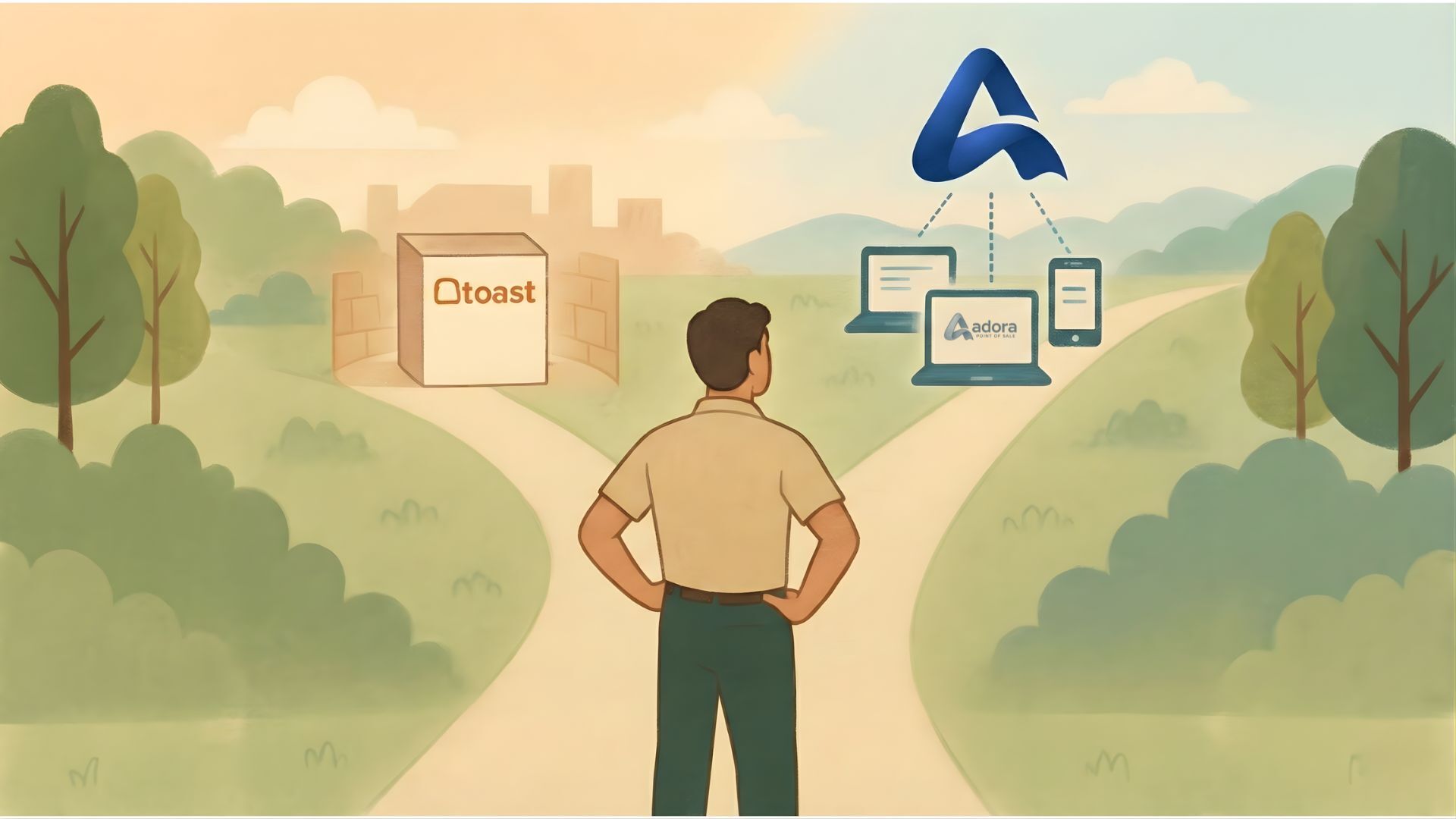
Adora vs. Toast: The Hidden Costs of Convenience in Restaurant Tech
RESTAURANT TECHNOLOGY
For many pizza operators, technology is supposed to make life easier. You’ve got orders flying in, tickets printing, deliveries to track, and staff to manage, all while the ovens never stop. So when a platform promises an out-of-the-box solution that “just works,” it’s easy to see the appeal.
Toast built its empire on that promise. But as more operators have learned the hard way, convenience can come with a quiet price tag, one that grows heavier over time.
What begins as simplicity often becomes dependency. And in the restaurant world, dependency can be costly.
The All-in-One Illusion
Toast sells a dream of integration: one platform for your POS, payments, loyalty, and reporting. Everything connected, everything controlled. And for a single café or a sit-down restaurant, that might work fine.
But a pizza chain is a different story. You’re not just managing tables; you’re orchestrating a high-volume operation with delivery, carryout, online ordering, and franchise oversight. Every minute matters. Every margin point matters. And flexibility, real flexibility, is how you stay profitable.
That’s where the cracks in Toast’s Big-Box model start to show.
The Hardware Trap
Toast runs exclusively on proprietary Android hardware. That means when something breaks or becomes outdated, you can’t just replace it with a comparable device. You’re locked into Toast’s ecosystem; their tablets, their printers, their prices.
“If a screen goes down on a Saturday night, your replacement options are limited to what Toast approves and ships. That’s not freedom. That’s dependency disguised as convenience.”
By contrast, Adora runs in any browser. Any device that connects to the internet, whether it be an iPad, tablet, or phone, becomes a register, a management portal, or a reporting hub. You choose the hardware that fits your budget and workflow. You’re not forced to buy a new system every time a cable fails.
The Payments Problem
The lock-in doesn’t stop at hardware. Toast requires operators to use its in-house payment processor, with rates that are often higher than market averages and tied to long-term contracts.
It’s a subtle form of control: the longer you stay, the less leverage you have. You can’t easily shop around for better rates or switch providers without paying penalties. The system is designed to keep you inside the walls.
Adora takes the opposite approach. You bring your own processor. You own your data. You see exactly what you’re paying. That transparency doesn’t just build trust, it builds profit. When margins are razor-thin, being able to negotiate your own processing terms can mean thousands saved per year, per store.
When Innovation Slows Down
In a closed ecosystem, innovation moves at the speed of the provider, not the operator.
If Toast doesn’t support a tool you want to integrate, you wait. If they decide to sunset a feature you rely on, you’re forced to adjust. Their roadmap becomes your roadmap.
Adora was built differently. It’s an open, cloud-based system that thrives on partnerships. You can connect to best-in-class solutions across payroll, accounting, delivery, and loyalty, all without waiting for permission. The result is agility. When the market changes, you move with it.
Mobility, Management, and the Cloud
Freedom isn’t just philosophical. It’s practical.
With Adora, you can log in from anywhere: a corporate office, your car, or your home kitchen, and see every store in real time. Sales, labor, and delivery times all live.
Toast’s Android-based system is more dependent on in-store hardware, which can make remote management less flexible compared to browser-based, cloud-native platforms like Adora. For multi-unit pizza chains that need real-time visibility across locations, that difference in accessibility can matter.
The Real Cost of Big-Box
At first, Toast may look affordable. But factor in the recurring hardware replacements, forced payment processing, integration limits, and long-term inflexibility, and the numbers start to add up.
That’s the hidden cost of proprietary systems: they make leaving expensive, which makes staying inevitable. Over time, your technology starts owning you.
Adora’s model flips that script. You’re not buying into a system, you’re investing in freedom. You choose your partners. You control your data. You adapt on your terms.
Freedom Is the Smarter Investment
Technology should empower pizza operators, not limit them. It should grow with your business, not restrict it.
When you choose Adora, you’re not just choosing a POS; you’re choosing the freedom to evolve. The freedom to negotiate better deals. The freedom to innovate faster. The freedom to build your business your way. Because in the end, that’s what real ownership looks like.
If you want to see how Adora POS stacks up against the competition firsthand, schedule a demo today. Not only will we answer any questions you may have, and show you what's new in restaurant tech, we’ll even give you 3 MONTHS FREE if you end up choosing independence with Adora POS.
Read more
See all articles
Restaurant Credit Card Processing Fees: What Pizzerias Actually Pay
RESTAURANT TIPS
Adora POS vs. PAR POS: Which Is Better for Pizza Chains?
RESTAURANT TECHNOLOGY
12 Questions Every Pizzeria Owner Should Ask a POS Vendor Before Switching
RESTAURANT TECHNOLOGY